修士課程のWoosang KimさんがIEEE VRにてポスター発表を行いました

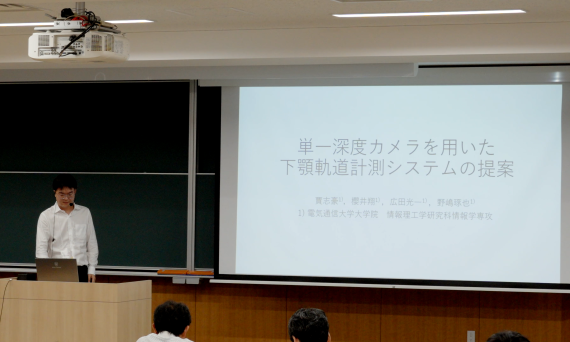
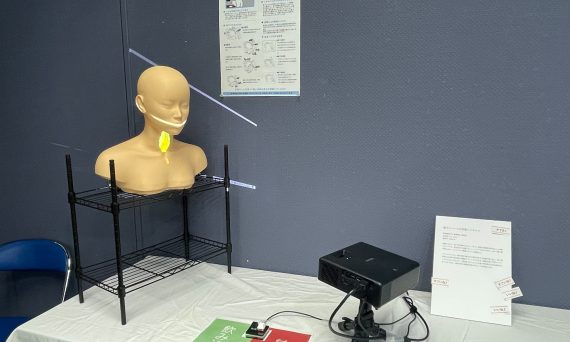
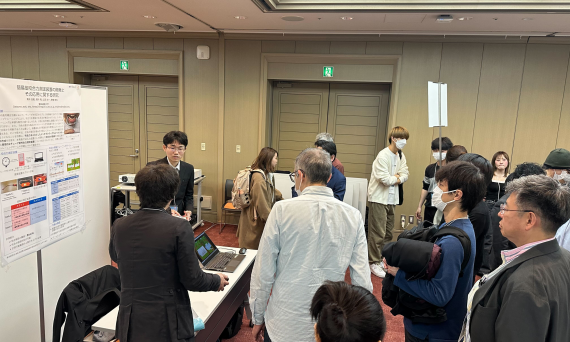
(2026/4/2修正)2026年3月21日~25日にかけて韓国大邱広域市展示コンベンションセンター(EXCO)にて開催されたIEEE VRにおいて,修士課程2年のWoosang Kimさんがポスター発表を行いました.電気刺激を用いた食感生成・変容に関する研究です. Woosang Kim, Sho Sakurai, Koichi Hirota and Takuya Nojima, “Characterizing Gingival Electrical Stimulation Toward Intraoral Texture Display,” Proceedings of IEEE VR, Poster, Booth ID: 251, 2026.

VR空間の初期暴露条件がVR酔いの馴化過程に与える影響 / The effect of initial exposure conditions in VR space on habituation process to VR sickness

VR酔いはVRの普及を阻む大きな課題として広く知られている。既存の対策は、視野を制限するなどして酔いを軽減する方法や反復暴露により慣れさせる方法など酔わなくなるという結果を重視するものが主であった。一方で酔いの馴化過程に着目すると、その過程を解明・制御可能になればユーザの体調や「早く慣れたい」などのニーズに合わせた馴化過程をデザインすることができるようになると考えらえる。このため、我々はその初歩としてVR酔いの馴化に影響を与える要因を特定し、その関係性を解明することを目指した。本研究ではVRの初期体験が要因であると考え、初期に暴露されるVR空間の酔い負荷が高いほど、VR酔いは大きく軽減されるという仮説を立て、SSQを用いてこれを検証した。 VR sickness is widely recognized as a major obstacle to the widespread adoption of VR. Existing countermeasures have primarily focused on the result of not getting sick, such as methods that reduce sickness by restricting the field of view or methods that promote habituation through repeated exposure.However, by focusing on the process of habituation to sickness, if we can elucidate and control this process, it may become possible to design habituation processes tailored to the user’s physical condition and needs, such as the desire to “get used to it quickly.”Therefore, as a first step, we aimed to identify the factors that influence habituation to VR sickness and to clarify

Read More

修士課程の西田直人さんがICEC2025にて口頭発表を行いました

2025年8月27日~30日にかけて日本大学文理学部キャンパスにて開催されたIFIP-ICEC2025において,修士課程2年の西田直人さんが口頭発表を行いました.Augmented Sports化したチャンバラ”Parablade”とそのゲームバランス最適化手法に関する研究です. Naoto Nishida, Yusaku Maeda, Kamui Sato, Sho Sakurai, Koichi Hirota and Takuya Nojima, “Parablade: A Proposal of Chambara Based on Augmented Sports – A Study of Appropriate Game Balancing Methods,” ICEC2025, 293–306, 2025. https://doi.org/10.1007/978-3-032-02555-5_21

VR空間における3次元移動を両手・視線と独立して制御できるインタフェースの研究 / Hands- and Gaze-Free Interface for Controlling 3D Locomotion in VR Space

現在,空中飛行や宇宙遊泳といった3次元移動を体験できるVRコンテンツが多々存在し,中にはFPSといったアクションを加えたものもある.しかし既存コンテンツでは,移動制御に手持ちコントローラや視線方向を用いているため,移動制御と銃などの道具使用が同時に行えない,周囲に目を向けると移動方向が変わってしまうなど,移動制御と他アクションが干渉してしまう問題を抱えている.本研究では,両手・視線と独立して,VR空間における6自由度運動を制御できるインタフェースの実現を目標とし,足や上半身,肩の動作を利用した3次元移動制御法を試作・評価してきた. Today, there are various kinds of VR contents that enable us to experience 3D locomotion like flying or spacewalking. Some of them combine 3D locomotion and other actions like FPS. However, these existing contents use hand-held controllers or gaze-direction for controlling 3D locomotion, which impair using hand-held tool like gun or looking around. The goal of this research is the realization of the hands- and gaze-free interface for controlling 6 degrees of freedom movement in VR space. To date, we have made and evaluated several control methods using feet, upper body or shoulders. 足のみを用いた6自由度運動制御「Fp2」“Fp2”, controlling 6 degrees of freedom movement by only feet 足,上半身,肩の動作を併用した4自由度運動制御「FUS」“FUS”, controlling 4 degrees of freedom

Read More

学士課程の宮尾旺佑さん,峰松丈倖さん,修士課程の佐藤力樹さんが第30回日本バーチャルリアリティ学会大会にてスライド・ポスター発表を行いました

2025年9月17~19日にかけ,立命館大学大阪いばらきキャンパスにて開催された第30回日本バーチャルリアリティ学会大会において,学部2年の宮尾旺佑さん,学部4年の峰松丈倖さん,修士課程1年の佐藤力樹さんが以下の内容でスライド・ポスター発表を行いました.